
Key Differences Between Organoids and Traditional Primary Cell Cultures
In cell biology research, primary cell culturehas long been considered the model closest to the actual state in vivo. However, the emergence of organoids-fueled by advances in 3D culture systems and stem cell biology-has fundamentally transformed experimental approaches. Organoids are not merely complex cell aggregates; they are self-organizing, three-dimensional structures that recapitulate key architectural and functional features of real organs. This represents a conceptual and methodological leap from traditional monolayer cultures.
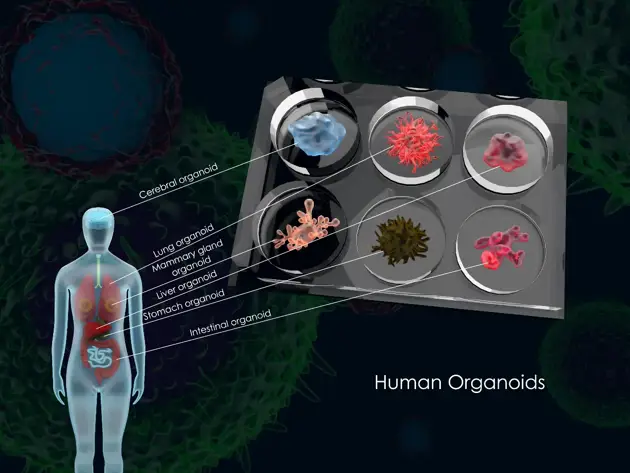
Comparison of Cell Sources and Establishment Methods
| Primary Cell Culture | Organoid Culture | |
|---|---|---|
| Cell Source | Directly from tissues via mechanical/enzymatic digestion | Stem cells (iPSC, ESC) or tissue-specific stem/progenitor cells |
| Proliferative Capacity | Limited, typically senesce after 3-5 passages | Long-term self-renewal (>20 passages) |
| In Vivo Relevance | Monolayer, lacks tissue architecture | Polarized epithelium, lumen formation, multicellular diversity |
| Applications | Basic physiological studies and toxicological screening | Disease modeling, drug discovery, regenerative medicine, precision oncology |
Morphological and Functional Differences
| Primary Cell Culture | Organoid Culture | |
|---|---|---|
| Morphology | Flat monolayer without spatial organization | 3D architecture with lumen and polarized domains |
| Cellular Composition | Predominantly one cell type | Multiple cell types (stem, progenitor, differentiated) |
| Signaling | Exogenous growth factor-dependent | Maintained by endogenous intercellular signaling |
| Functionality | Partial metabolic/secretory activity | Tissue-level functions (absorption, secretion, neural activity) |
| Lifespan | Short-term (days) | Long-term (weekly to monthly) |
Reproducibility and Application Potential
| Primary Cell Culture | Organoid Culture | |
|---|---|---|
| Repeatability | High donor variability; short lifespan | Cryopreservable; consistent across batches |
| Modeling Capacity | Limited ability to mimic disease niches | Enables modeling of genetic disorders and cancers |
| Drug Screening | Suitable for single-mechanism validation | High-throughput, patient-specific drug response assays |
| Multi-Organ Interaction | Not feasible | Compatible with organ-on-a-chip systems for co-culture |
Feasibility and Challenges
| Primary Cell Culture | Organoid Culture | |
|---|---|---|
| Technical Difficulty | Lower cost; beginner-friendly | High cost; requires sterile technique, ECM handling, and thermal control |
| Key Bottlenecks | Short lifespan; donor variability | Structural heterogeneity; limited standardization |
| Optimization Focus | Media formulation improvements | Defined ECM alternatives; automation and control of self-organization |
Summary and Strategic Insights
| Primary Cell Culture | Organoid Culture | |
|---|---|---|
| Dimensionality | 2D | 3D |
| Complexity | Low | High |
| Physiological Relevance | Moderate | High |
| Application Potential | Restricted | Widely |
Creative Bioarray offers a comprehensive range of products and services for 3D spheroid and organoid culture, enabling to create more physiologically relevant in vitro models. Our specialized culture media and scaffolds support the growth and development of multicellular structures, while our organoid culture kits allow the establishment and maintenance of organoid models derived from various tissues and cell types.
Moreover, our drug testing platform integrates 3D spheroid and organoid culture models with high-throughput screening technologies to assess the efficacy and safety of pharmaceutical compounds. By mimicking in vivo environments, our innovative solutions provide more predictive results for drug development and toxicity testing.
3D Spheroid & Organoid Culture Reagents
3D Spheroid Platform for Drug Development
Organoid Platform for Drug Development
Your email address will not be published. Required fields are marked *