
KO vs. Cre vs. Flox: A Guide to the Gene-Editing Menagerie
In the fields of biology and medical research, breakthroughs in gene editing technology have provided strong support for gene function analysis, and gene-edited mice, as a core research tool, have always held an irreplaceable position. Among them, KO mice, Cre mice, and Flox mice are the three most commonly used models by researchers. Each has its own specific functional role, yet they also have a close synergistic relationship.
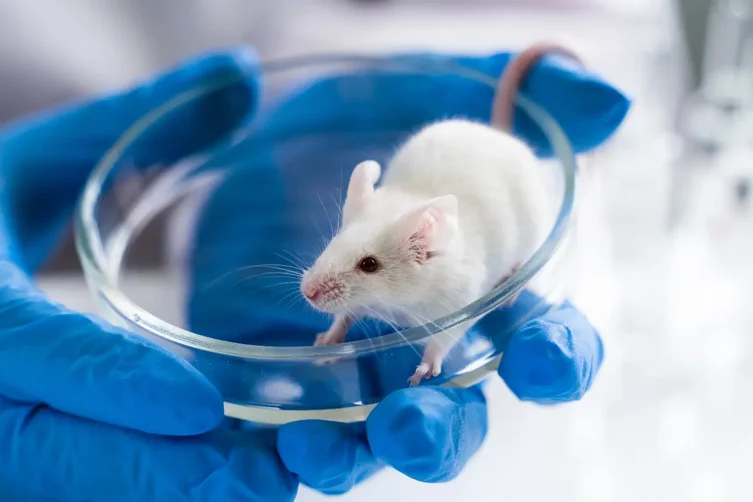
KO Mice: "Global Inactivators" of Systemic Gene Function
KO mice, or gene knockout mice, are designed to completely inactivate specific target genes throughout the mouse's genome using gene editing technology, ultimately preventing the gene from synthesizing functional proteins.
The core characteristics of this type of model are "systemic" and "permanent". From the embryonic development stage, the expression of the target gene is completely blocked, and this state persists throughout the mouse's entire lifespan, covering all tissues and organs. Based on this characteristic, knockout (KO) mice have become the preferred tool for studying the global function of genes, especially suitable for initially clarifying the overall role of a gene in the physiological and pathological processes of an organism.
However, KO mice also have significant limitations. If the target gene is a key gene indispensable for embryonic development, systemic knockout often leads to embryonic lethality, making subsequent research impossible. Therefore, before selecting KO mice as a research model, researchers must conduct preliminary validation through professional databases to confirm that the knockout of the target gene will not cause embryonic lethality. Furthermore, due to the systemic nature of gene knockout, it is impossible to rule out the mutual interference of gene functions in different tissues. For studies requiring precise localization of tissue-specific functions, KO mice are insufficient.
Flox Mice: A "Precise Reserve" for Conditional Knockout
Flox mice, short for mice with LoxP sites flanking them, are constructed by precisely inserting LoxP marker sites upstream and downstream of the target gene, forming a "specific marker" for that gene.
Unlike KO mice, the structure and function of the target gene are completely normal when Flox mice exist alone, without any interference with the mouse's development or physiological state. This characteristic makes it a "basic reserve" for conditional knockout models-it doesn't possess gene knockout capabilities itself, but provides the necessary prerequisite for subsequent precise knockout. The core value of the Flox mouse lies in its "awaiting activation"; its LoxP sites act like pre-reserved "recognition markers", waiting for a specific signal to trigger the gene deletion process.
The Flox mouse is the core foundational model for achieving tissue-specific and time-specific knockout. Genes without LoxP site markers cannot undergo subsequent conditional editing; therefore, the construction of high-quality Flox mice is a crucial prerequisite for precise gene function research.
Cre Mice: "Specific Actuators" of Gene Editing
The Cre mouse, or Cre recombinase mouse, has the core function of expressing Cre recombinase. A key characteristic of this enzyme is its ability to specifically recognize and cleave DNA fragments between LoxP sites.
The core advantage of the Cre mouse lies in its "expression specificity", determined by promoter design-by selecting different promoters, Cre recombinase can be expressed in specific tissues, at specific developmental stages, or under induced conditions (such as drug induction). For example, by selecting a liver-specific promoter, Cre recombinase is expressed only in liver tissue; by selecting an inducible promoter, the expression time of Cre enzyme can be regulated externally.
It is important to clarify that Cre mice themselves do not alter the gene function of mice; they exist only as "gene scissors". Only when Cre mice are used in conjunction with Flox mice can the Cre recombinase they carry function, precisely cleaving the target gene between LoxP sites in Flox mice, thereby achieving gene knockout under specific conditions. Therefore, Cre mice are the "execution tool" for conditional knockout, and their specificity directly determines the accuracy of gene editing.
Synergistic Effect: Cre×Flox-Mediated "Spatiotemporally Controllable Knockout Model"
When research needs extend beyond systemic knockout or simple labeling, the synergistic effect of Cre mice and Flox mice becomes apparent-the offspring produced by their cross are specific knockout mice, i.e., conditional knockout models.
The construction logic of this type of model is clear: the hybrid offspring simultaneously carry the target gene marked with LoxP and the Cre recombinase gene. In tissues or stages where Cre recombinase is expressed, the target gene is precisely cleaved and inactivated; while in tissues or stages where Cre recombinase is not expressed, the target gene retains normal function. This "on-demand knockout" model perfectly compensates for the shortcomings of systemic knockout in KO mice.
Its core advantage lies in achieving "spatiotemporal control" of gene knockout: it avoids the embryonic lethality or multi-tissue interference that may result from systemic knockout, while precisely focusing on gene function in specific tissues, specific developmental stages, or specific pathological processes. For example, when studying the role of a gene in adult mouse liver disease, by crossing liver-specific Cre mice with Flox mice, the gene can be knocked out only in the liver of adult mice, excluding interference from other tissues or developmental stages, making the research results more targeted and reliable.
Key Differences and Application Boundaries
The three types of models have clearly defined functional roles and application scenarios, which can be quickly distinguished by core characteristics:
KO mice, centered on "systemic and permanent" knockout, are suitable for preliminary exploration of global gene function, but are limited by embryonic lethality risk and tissue non-specificity; Flox mice, centered on "non-damaging markers", are the basis for conditional knockout, but lack knockout function themselves and require Cre enzyme activation; Cre mice, centered on "specific expression", are the execution tool for knockout, but have no actual knockout effect when used alone and require combination with Flox mice; while specific knockout mice are the product of the synergy of all three, centered on "spatiotemporal controllability", and are suitable for precise and in-depth gene function research.
In practical research selection, the principle of "needs matching" must be followed: if the only requirement is to determine whether a gene is involved in a specific physiological or pathological process, and there is no risk of embryonic lethality, KO mice can be prioritized; if the focus is on specific tissues, stages, or to avoid embryonic lethality, Flox mice should be constructed first, and then paired with corresponding specific Cre mice to obtain a conditional knockout model through hybridization.
Outsource Disease Models With Confidence
Creative Bioarray is the leading preclinical CRO specializing in animal models services. We have a wide range of transgenic and inducible mouse and rat models readily available for your studies. Our team of animal model scientists will work with you to find the right model.
Learn more about our fully characterized and validated animal models.
Your email address will not be published. Required fields are marked *