
Immunohistochemistry Staining: A Complete Step By Step Guide
Immunohistochemistry (IHC) is indispensable in both research and diagnostic pathology. By exploiting the high specificity of antigen‑antibody reactions combined with enzyme‑ or fluorescence‑based detection, IHC enables precise localization of peptides, hormones, cytokines, and other antigens within intact tissue architecture. Success, however, hinges on rigorous standardization-from tissue handling through final mounting. This guide consolidates validated protocols for paraffin sections, cell coverslips, and frozen sections, with critical tips to ensure reproducible, artifact‑free results.
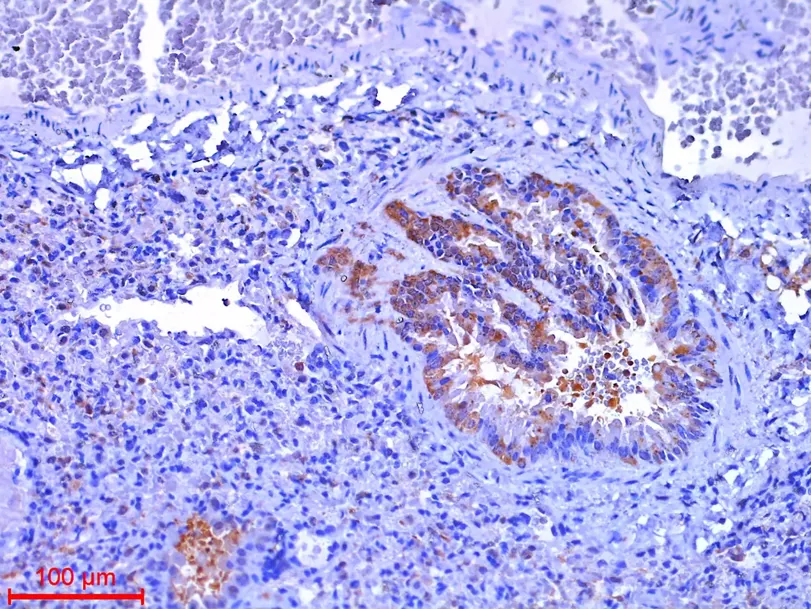
1. Pre‑Experimental Preparation: Specimens & Slide Coating
1.1 Specimen requirements
Optimal preservation follows the "fresh, rapid, standardized" principle. Tissue blocks should not exceed 2 cm × 1.5 cm × 0.3 cm (thickness ≤0.3 cm). Fixative volume must be at least 20× the tissue volume. After fixation, thorough washing removes residual fixative and prevents artefactual staining.
Cell preparations: Viable cells can be processed via imprint, smear, or cytospin. Cultured cells are often grown directly on coverslips inside 6‑ or 9‑well plates. For smears, prepare a cell suspension at optimal density and spread onto poly‑L‑lysine‑coated slides.
Anti‑detachment coating: Slides must be pretreated to avoid section loss during washes.
1.2 Glass slide coating protocol
- Soak slides in detergent solution (e.g., 0.5% Labolene) for 30 min → rinse thoroughly with distilled water → air dry.
- Immerse in strong acid‑potassium permanganate cleaning solution for 24 h → rinse → dry.
- Dip slides in APES (3‑aminopropyltriethoxysilane) solution diluted 1:50 in acetone for 10-20 seconds (do not use plastic containers or racks).
- Transfer slides sequentially into pure acetone baths: first for 10 seconds, then another 5 seconds.
- Air‑dry naturally or in a 37 °C oven. Store coated slides in dust‑free box.
Pro tip: Gentle handling of tissues and cells during fixation and washing preserves antigenicity. Never let specimens dry out before fixation.
2. Paraffin Section IHC - Most Widely Used Protocol
Paraffin embedding offers excellent morphology and long‑term storage. Follow these standardized steps meticulously.
2.1 Deparaffinization & rehydration
- Bake slides at 60 °C for 1 hour.
- Xylene I - 10 min → Xylene II - 10 min.
- Graded alcohols: 100% → 95% → 80% → 70% (2 min each).
- Wash in distilled water with orbital shaking, 2 × 5 min.
2.2 Blocking endogenous peroxidase
- Incubate slides in 3% H2O2 (room temperature, dark, 10 min).
- Wash with distilled water, shaking, 2 × 5 min.
2.3 Antigen retrieval (critical step)
Use 10 mM sodium citrate buffer, pH 6.0. Choose method based on antibody datasheet:
- Pressure cooker: Submerge slides in buffer, heat until steam is produced, then maintain pressure for 3 min. Allow to cool slowly.
- Microwave: Heat to 92-95 °C, microwave for 5 min × 2 cycles, replenishing with pre‑warmed buffer between cycles. Cool naturally.
After retrieval, wash slides in PBS (pH 7.4) 2 × 5 min with shaking. Never let sections dry.
2.4 Blocking, antibodies & detection
- Serum blocking: Wipe excess liquid around sections. Apply normal serum (same species as secondary antibody). Incubate 37 °C, 15 min.
- Primary antibody (Ab1): Drain serum (no washing). Add diluted primary antibody. Incubate 37 °C, 2 h or 4 °C overnight (better for weak antigens).
- Wash with PBS (shaking) 2 × 5 min.
- Secondary antibody (biotinylated): Apply, incubate 37 °C, 40 min → wash PBS 2 × 5 min.
- Tertiary complex (SAB/HRP): Apply streptavidin‑biotin complex, 37 °C, 40 min → wash PBS 2 × 5 min.
- DAB chromogen: Prepare fresh DAB working solution. Apply and monitor under microscope. Stop reaction by rinsing with tap water when desired intensity is reached.
- Counterstain: Hematoxylin for 30 sec → tap water rinse → blue in running tap water for 15 min.
- Dehydration & clearing: 80% alcohol (2 min) → 95% (2 min) → 100% (2 × 5 min) → xylene (2 × 5 min).
- Mount: Apply Canada balsam or neutral mounting resin, coverslip.
3. Cell Coverslip / climbing slice IHC (Simplified)
Cells grown directly on coverslips preserve natural morphology and require less processing.
- Remove coverslip from culture plate and immediately fix in ice‑cold acetone for 20-30 min.
- Wash in distilled water 2 × 5 min.
- Permeabilization (for intracellular antigens): Incubate in permeabilization buffer (e.g., 0.1% Triton X‑100 in PBS) for 5 min. Omit for membrane antigens.
- Wash in distilled water 2 × 5 min.
- Proceed directly to serum blocking (same as paraffin protocol from 2.4 onwards).
4. Frozen Section IHC - Preserving Labile Antigens
Frozen sections maximize antigen integrity, ideal for phosphorylated epitopes or rapidly degraded targets.
- Cut fresh or pre‑frozen tissue at 5-6 µm using a cryostat. Mount sections onto slides and immediately blow‑dry with cool air.
- If not stained immediately, store slides sealed at -20 °C.
- Fixation: 4 °C cold acetone for 10-20 min.
- Wash with PBS 2 × 5 min. For intracellular antigens, permeabilize with 0.1% citrate + 0.1% Triton X‑100.
- Block endogenous peroxidase: 3% H2O2 (RT, dark, 20 min).
- Wash PBS 2 × 5 min.
- Continue from serum blocking step (2.4). No heat‑induced antigen retrieval is typically required.
5. Critical Operation Tips & Troubleshooting
Fresh reagents daily
Antigen retrieval buffer and DAB working solution must be prepared fresh. DAB stock can be aliquoted and stored at -20 °C; avoid repeated freeze-thaw.
Never let sections dry
Dryness during retrieval, blocking, or antibody incubation causes high background and false negatives. Use a humidity chamber.
Wash thoroughly with agitation
Shaking or rocking washes (PBS, 0.1% Tween‑20) dramatically reduce non‑specific background.
Serum species matching
Always use normal serum from the same host species as the secondary antibody for blocking.
Microscope‑guided DAB development
Do not rely on fixed times. Observe chromogen deposition under the scope; stop by rinsing with tap water the moment specific signal appears without excessive background.
Antibody storage & dilution
Optimize primary antibody concentration via titration. Store antibodies according to manufacturer's instructions (aliquoted at -20 °C or 4 °C).
Reproducible IHC demands rigorous inclusion of positive and negative controls (isotype control, omission of primary antibody, known positive tissue). Each new antibody lot should be validated on your specific tissue type. Document all incubation times, temperatures, and lot numbers. Adherence to these standardized procedures transforms IHC from an art into a robust, quantitative tool.
Outsource Histology With Confidence
From routine histology and special staining to immunohistochemistry (IHC), immunofluorescence (IF), and medical device histopathology, Creative Bioarray delivers clean, consistent slides your team can trust.
| Services | Highlights |
|---|---|
| Routine Histology | Processing, embedding, sectioning, and H&E staining with rigorous QC. |
| Special Staining | Creative Bioarray offers special staining designed to reveal structures/microorganisms not readily seen with H&E-using standardized protocols, high-quality reagents, regular equipment maintenance, and rigorous QC with positive/negative controls. |
| Immunohistochemistry/Immunofluorescence (IHC/IF) | Our IHC and multiplex IF stain services are tailored to your study's specific markers and tissue types, delivering high-quality staining and reproducible results. |
| In Situ Hybridisation (ISH) | For researchers exploring gene expression or the tumor microenvironment, our ISH, TUNEL, and multiplexing solutions provide precise localization and quantification, supported by expert pathologist review or automated image analysis. |
Your email address will not be published. Required fields are marked *