
Huh‑7: The Workhorse Cell Line for Liver Cancer and Hepatitis Research
Among liver research models, few have achieved the status of Huh‑7. Derived from a well‑differentiated hepatocellular carcinoma (HCC), this cell line has become indispensable for studying viral hepatitis - especially hepatitis C virus (HCV) - as well as liver cancer biology, drug metabolism, and fatty liver disease. Below we explore its origin, core biological features, major applications, and some fascinating facts that every liver researcher should know.
Origin & Establishment
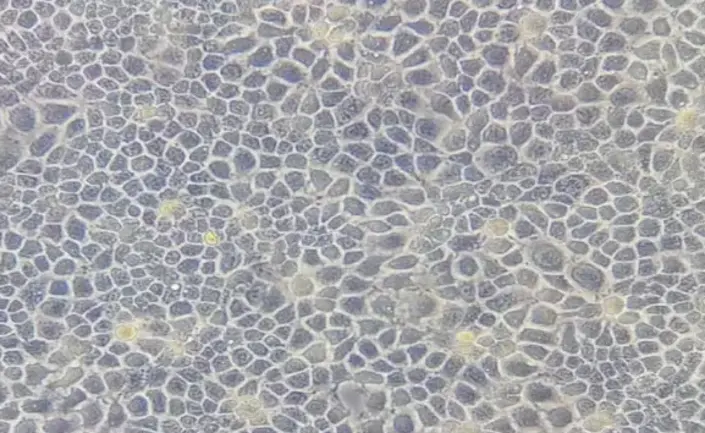
Huh‑7 cells were established in 1982 from a 57‑year‑old Japanese male with a well‑differentiated hepatocellular carcinoma. This East Asian background makes the line particularly relevant for hepatitis virus research, given the high prevalence of HBV and HCV in the region. The cells grow adherently with an epithelial‑like morphology and exhibit many characteristics of mature hepatocytes.
Core Properties & Key Advantages
Exceptional viral permissiveness
Huh‑7 and its derivatives (Huh‑7.5, Huh‑7.5.1) are highly susceptible to HCV, serving as the cornerstone for in vitro replication and infection systems. They are also used for HBV, dengue virus, and other hepatotropic viruses.
Retained liver‑specific functions
As a well‑differentiated HCC line, Huh‑7 expresses albumin, alpha‑fetoprotein (AFP), maintains cytochrome P450 enzyme activity, and secretes plasma proteins - making it closer to primary human hepatocytes than many other lines (e.g., HepG2).
Easy culture & high transfectability
Huh‑7 cells proliferate rapidly, adhere strongly, and are easily transfected. This enables efficient gene overexpression, knockdown (siRNA/shRNA), and CRISPR‑based editing.
Genomic heterogeneity (tumor‑like)
As a cancer cell line, Huh‑7 exhibits genetic drift and heterogeneity between laboratories. While challenging, this also mimics the intra-tumoral heterogeneity seen in patient HCC.
Major Research Applications
- Viral hepatitis research - HCV lifecycle studies (entry, replication, assembly, release), antiviral drug screening, resistance mechanism analysis; also HBV replication and viral protein function.
- Liver cancer biology - Investigating proliferation, apoptosis, invasion, metastasis, and stemness in HCC.
- Drug metabolism & hepatotoxicity - Utilizing endogenous CYP450 activity to evaluate hepatic metabolism and drug‑induced liver injury.
- Metabolic liver disease - Modelling non‑alcoholic fatty liver disease (NAFLD) and insulin resistance.
- Functional genomics - Overexpression or knockdown of genes to study their role in liver physiology and pathology.
Fascinating Facts about Huh‑7
It has a "hyper‑permissive" brother - Huh‑7.5
Scientists selected HCV‑permissive Huh‑7 subclones, yielding Huh‑7.5. This line carries a mutation in the innate immune sensor RIG‑I, crippling its antiviral interferon response. As a result, HCV replicates to extremely high titres. The further optimized Huh-7.5.1 became the gold-standard host for HCV research. Without Huh‑7, these super‑tools would not exist.
A hidden hero in curing hepatitis C
Direct‑acting antivirals (DAAs) that revolutionized HCV therapy were largely developed and validated using high‑throughput screening systems built on Huh‑7 cells. The line played an indispensable role in the global effort to cure chronic hepatitis C.
It can "get fat" - NAFLD modelling
Treating Huh‑7 with high concentrations of free fatty acids (e.g., palmitate) induces massive lipid droplet accumulation, creating an in vitro fatty liver model. This is widely used to study NAFLD pathogenesis and test potential therapeutics.
Huh‑7 vs. HepG2 - what's the difference?
Huh‑7 - Better for viral hepatitis and metabolic studies; higher differentiation; relatively lower tumorigenicity. HepG2 - More common in cancer biology and drug transporter research; higher tumorigenicity but poor viral permissiveness.
It has a personality - laboratory‑specific genetic drift
Long‑term passage in different labs has led to genetic drift. Huh‑7 from lab A may differ subtly in gene expression, growth rate, or viral susceptibility from Huh‑7 in lab B. Always characterize your stock and use early passages for critical experiments.
Comparison at A Glance: Huh‑7 vs. HepG2
| Huh‑7 | HepG2 | |
|---|---|---|
| HCV permissiveness | High (especially Huh‑7.5/7.5.1) | Very low |
| Differentiation status | Well‑differentiated (more hepatocyte‑like) | Moderately differentiated |
| Albumin & AFP expression | Positive | Positive but lower AFP |
| CYP450 activity | Moderate to good | Low to moderate |
| Tumorigenicity in mice | Moderate | High |
| Typical applications | HCV/HBV, NAFLD, drug metabolism | Cancer biology, drug transport |
Our Cell Products & Service Capabilities
Over years of continuous maintenance and quality control, our lab has built a robust, high‑viability cell bank. We routinely culture and passage the following lines, all available in healthy, actively growing states:
| Cat No. | Product Name | Cell Type |
|---|---|---|
| CSC-C9441L | Huh7 | Hepatoma Cells |
| CSC-C9667L | SNU-398 | Hepatoma Cells |
| CSC-C9712L | SNU-878 | Hepatoma Cells |
| CSC-C9713L | SNU-886 | Hepatoma Cells |
| CSC-C9701L | SNU-761 | Hepatoma Cells |
| CSC-C6898J | huH-1 | Hepatoma Cells |
| CSC-C0245 | hep-3B | Hepatoma Cells |
| CSC-C6883J | JHH-5 | Hepatoma Cells |
| CSC-C0313 | HEP-G2 | Hepatoblastoma Cells |
| CSC-C20013M | Hep-G2/2.2.15 | Hepatoblastoma Cells |
| CSC-C6719J | OZ | Intrahepatic Cholangiocarcinoma Cells |
| CSC-C6349J | TKKK | Intrahepatic Cholangiocarcinoma Cells |
| CSC-C6345J | HuH-28 | Intrahepatic Cholangiocarcinoma Cells |
| CSC-C9200W | HuCCT1 | Intrahepatic Cholangiocarcinoma Cells |
| CSC-C6856J | KKU-213 | Intrahepatic Cholangiocarcinoma Cells |
| CSC-C9628L | SNU-1196 | Hilar Cholangiocarcinoma |
| CSC-C0401 | TFK-1 | Bile Duct Carcinoma Cells |
| CSC-C6321J | LX-2 | Hepatic Stellate Cell Line |
| CSC-C6414J | TGBC2TKB | Gallbladder Undifferentiated Carcinoma |
Leveraging these well‑characterized cell models, our experimental platform delivers reliable, reproducible results for a wide range of functional assays. For collaboration or cell line requests, please contact our core facility.
Your email address will not be published. Required fields are marked *