
5 Tips to Boost Protein Purification
In biological research and biopharmaceutical studies, protein purification is a core and indispensable experimental step, and protein loss remains a key challenge for researchers. As complex biological macromolecules, proteins are highly dependent on their external environment for stability. Irreversible aggregation, non-specific adsorption, and endogenous enzyme degradation are the three core mechanisms causing protein loss.
To fundamentally reduce protein loss, it's not enough to optimize a single step. Instead, it requires meticulous operation throughout the entire process, from sample preparation to concentration and buffer replacement, based on the core principle of "simulating the protein's natural environment and blocking the three major loss mechanisms". Neglecting any step can lead to irreversible protein loss, ultimately affecting the accuracy of experimental results and the progress of subsequent research.
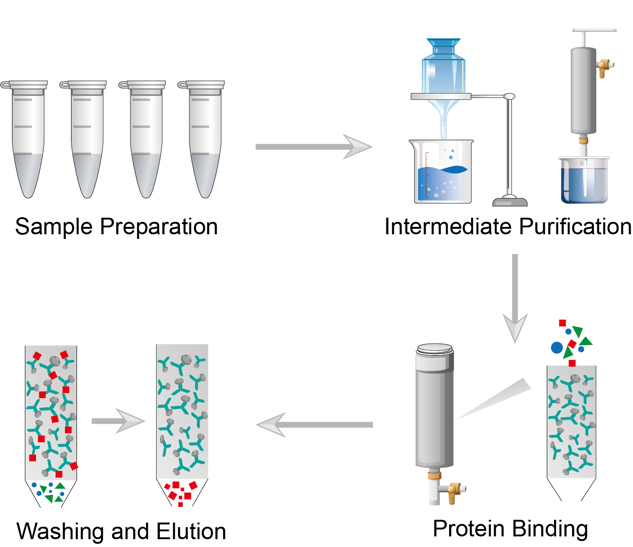
Sample Preparation: Strict Control at the Source, Guarding the First Line of Defense Against Loss
Sample preparation is the starting step in protein purification and also the stage where protein loss is most likely to occur and is most severe. Scientific control of this step directly determines the basic purification effect. The core is to achieve dual control over gentle fragmentation and efficient separation.
Gentle Cell Disruption, Reducing Denaturation Loss
The cell disruption method must be precisely selected based on the protein's characteristics and origin. Mechanical disruption is highly efficient but generates significant heat and shear force, easily causing denaturation of fragile proteins. For such proteins, non-mechanical methods such as liquid nitrogen grinding, osmotic shock, or enzymatic digestion are preferred. Regardless of the method chosen, the disruption process must be carried out in an ice bath, following the "short-time, multiple-times" principle. During ultrasonic disruption, the sonication and interval times must be strictly controlled, and the sample must be cooled promptly, as the denaturation rate increases several times for every 10°C increase in temperature. Simultaneously, the disruption buffer should be optimized, adding protease inhibitors as needed to block endogenous enzyme degradation of the target protein; adding reducing agents to prevent the formation of incorrect disulfide bonds within or between proteins, leading to aggregation; and adding 5%-10% glycerol as a stabilizer to increase solution viscosity, reduce molecular collisions, and stabilize hydrophobic interactions, providing comprehensive protection for the protein structure.
Efficient Solid-Liquid Separation, Avoiding Adsorption and Entrainment Losses
The homogenate after disruption contains a large amount of cell debris. Centrifugation requires precise parameter control, typically at 10000-15000g, 4°C for 20-30 minutes. Insufficient centrifugation force can lead to debris residue clogging the chromatography column, while excessive force or time can cause precipitation and entrainment of the target protein. The supernatant after centrifugation must be filtered through a 0.45μm or 0.22μm filter membrane before injection to remove small particle aggregates and protect the chromatography column. To address the issue of hydrophobic proteins easily adsorbing onto ordinary filter membranes, low-protein adsorption filter membranes such as PVDF should be used, or the filter membrane should be thoroughly rinsed with buffer solution before filtration to avoid non-specific adsorption caused by the filter membrane.
Buffer Optimization: Creating a Suitable Environment to Avoid Environmentally Induced Losses
Buffer solutions are the in vitro "survival environment" for proteins. Sudden changes in pH and ionic strength are significant triggers for protein aggregation and adsorption. Creating a stable and suitable buffer system for proteins is crucial for minimizing non-specific losses.
Precise pH Control to Avoid Isoelectric Point Risks
The buffer pH should deviate from the protein's isoelectric point by at least 1.0-1.5 units. At the isoelectric point, proteins have zero net charge and minimal electrostatic repulsion, making them highly susceptible to aggregation and precipitation. Simultaneously, the buffer must have sufficient buffering capacity at the working pH to prevent pH drift during chromatography, which can disrupt protein structural stability.
Appropriate Salt Concentration Adjustment to Balance Adsorption and Dissolution
An appropriate salt concentration can reduce non-specific adsorption between proteins and between proteins and the packing material through charge shielding effects. A 150mM NaCl concentration is commonly chosen. However, excessively high salt concentrations can cause salting out, leading to protein precipitation. Precise control based on protein characteristics is necessary. For proteins sensitive to metal ions, chelating agents such as EDTA or EGTA need to be added to chelate metal ions and prevent protein oxidation.
Utilizing Additives to Enhance Stability
In membrane protein purification, a suitable detergent must be selected to dissolve the protein from the membrane, and the detergent concentration must be strictly controlled. Too low a concentration will not achieve effective dissolution, while too high a concentration will interfere with subsequent purification processes. Small molecule additives such as arginine can effectively inhibit protein aggregation and can be added appropriately to the eluent during protein refolding or the later stages of purification to specifically address protein loss caused by aggregation.
Chromatographic Purification: Precise Selection + Parameter Optimization to Improve Binding and Elution Efficiency
Chromatography is the core step in protein purification. Protein loss at this stage mainly stems from low protein binding to the packing material and insufficient elution. The core optimization strategy is to select a suitable chromatography technique based on protein characteristics, while simultaneously finely controlling operating parameters to achieve a dual improvement in binding and elution efficiency.
Affinity Chromatography: Specific Capture, Reduced Flow-Through Loss
The key to affinity chromatography lies in achieving specific capture of the target protein. The choice of tag and packing material must be adapted to the protein type. While 6xHis tags are highly versatile, their binding efficiency is limited in some scenarios. For low-abundance or difficult-to-express proteins, larger tags such as GST and MBP can be used. These tags not only have strong binding affinity but also provide solubilizing effects. For packing materials, high-capacity, high-specificity agarose or magnetic bead packing materials are preferred to meet the purification needs of precious samples. During sample loading, avoid pursuing high flow rates; the linear flow rate should be controlled at 1-5 cm/h to ensure sufficient binding between the tag and ligand, preventing unbound protein flow-through. The washing process requires optimized buffer parameters and precise control of imidazole concentration to effectively remove contaminating proteins while maximizing the retention of the target protein, avoiding losses caused by overwashing.
Ion Exchange Chromatography: Pretreatment + Gradient Elution to Avoid Protein Retention
Sample pretreatment is essential before ion exchange chromatography. Ensure the sample conductivity is below the equilibrium buffer. If the sample salt concentration is too high, proteins cannot bind to the packing material and will be lost directly in the flow-through. High salt concentrations can be adjusted through dialysis, ultrafiltration, or sample dilution. Linear gradient elution is preferred over one-step elution, as it more accurately locates the elution peak of the target protein, avoiding co-elution with other proteins or retention on the column due to incomplete elution.
Gel Filtration Chromatography: Strict Volume and Flow Rate Control to Reduce Diffusion and Dilution
The resolution of gel filtration chromatography is inversely proportional to the loading volume. The loading volume should be strictly controlled at 5%-10% of the column volume. While this temporarily reduces protein concentration, it ensures sharp peaks and effectively reduces dilution losses due to diffusion. This chromatography method inherently has a slower flow rate, resulting in a longer protein residence time within the column. Therefore, it is necessary to control the flow rate appropriately and maintain a constant column temperature to prevent protein aggregation and further loss within the column.
Operational Details: Preventing Accumulated Micro-Losses
During protein purification, researchers often focus on experimental design and core procedures, but easily overlook operational details. These details are the main cause of accumulated micro-losses. Seemingly small individual losses can significantly reduce the overall recovery rate when accumulated. Meticulous control of these details is crucial for minimizing protein loss.
Use Low-Protein Adsorption Consumables Throughout the Process
Centrifuge tubes and chromatography columns should preferably be made of polypropylene or polystyrene with low protein adsorption. Use filter tips or low-adsorption tips for pipetting to avoid non-specific adsorption from containers and consumables at the source, especially suitable for low-concentration protein purification.
Avoid Repeated Freeze-Thaw Cycles of Protein Solutions
Ice crystal formation can damage protein structure and cause aggregation. If samples need long-term storage, aliquot them into small volumes for single use to reduce the number of freeze-thaw cycles.
Use Gentle Methods to Mix Samples
Vigorous vortexing is strictly prohibited. Vigorous shaking introduces air bubbles, and the interfacial tension of air bubbles can damage protein structure. Gentle inversion or low-speed magnetic stirring can be used for mixing.
Prevent Air Bubbles from Forming Within the Chromatography Column
Air bubbles occupy packing volume and create dead volume, leading to peak splitting or even protein loss, air bubbles must be thoroughly removed from the sample before loading. During the process, proper air bubble prevention measures should be taken.
Concentration and Buffer Replacement: Gentle Operation, Guarding the Final Purification Gate
Concentration and buffer replacement is the final step in protein purification. At this stage, the protein concentration reaches its highest level, and it is also the most likely stage for protein aggregation and precipitation. The operation of this step directly determines the final protein recovery rate. The key is to concentrate gently and avoid protein loss due to improper operation.
Precise Selection of Ultrafiltration Tubes to Reduce Non-Specific Adsorption
The molecular weight cutoff of the ultrafiltration tube should be selected to be 1/3 to 1/5 of the target protein's molecular weight. Membrane pores that are too large can easily lead to protein leakage, while pores that are too small will result in extremely slow flow rates, causing protein to remain on the membrane surface for too long and denature. Regenerated cellulose membranes are preferred as they have low protein adsorption and good chemical stability. Before using new ultrafiltration tubes, the membrane surface should be thoroughly rinsed with buffer solution to reduce non-specific adsorption.
Optimize Concentration Procedures to Avoid Protein Precipitation and Denaturation
During concentration, strictly follow the centrifugation force recommended in the instructions. Do not use excessively high centrifugation forces to pursue speed, as this can easily cause membrane blockage or protein denaturation. Avoid over-concentration. When the solution volume decreases to a certain extent, the protein concentration and viscosity increase sharply. Continuing to concentrate can easily lead to the formation of an irreversible precipitation layer on the membrane surface; in this case, the sample must be removed promptly. After concentration, gently blow away the protein layer on the membrane surface with a pipette tip to ensure that all proteins are completely dissolved in the buffer solution, with no invisible flocculent matter, ensuring complete protein recovery.
Your email address will not be published. Required fields are marked *