
Serum-Free Cell Culture Media: A Complete Guide to Consistent Growth and Scalable Production
Serum-free cell culture media have become essential in modern research, bioproduction, and cell therapy. Whether you work with CHO, HEK293, hybridomas, primary cells, or stem cells, the choice of medium directly affects growth, productivity, reproducibility, and regulatory compliance.
This guide explains what serum-free media are, how they differ from serum-containing and chemically defined media, and how to select and adapt the right formulation for your cells.
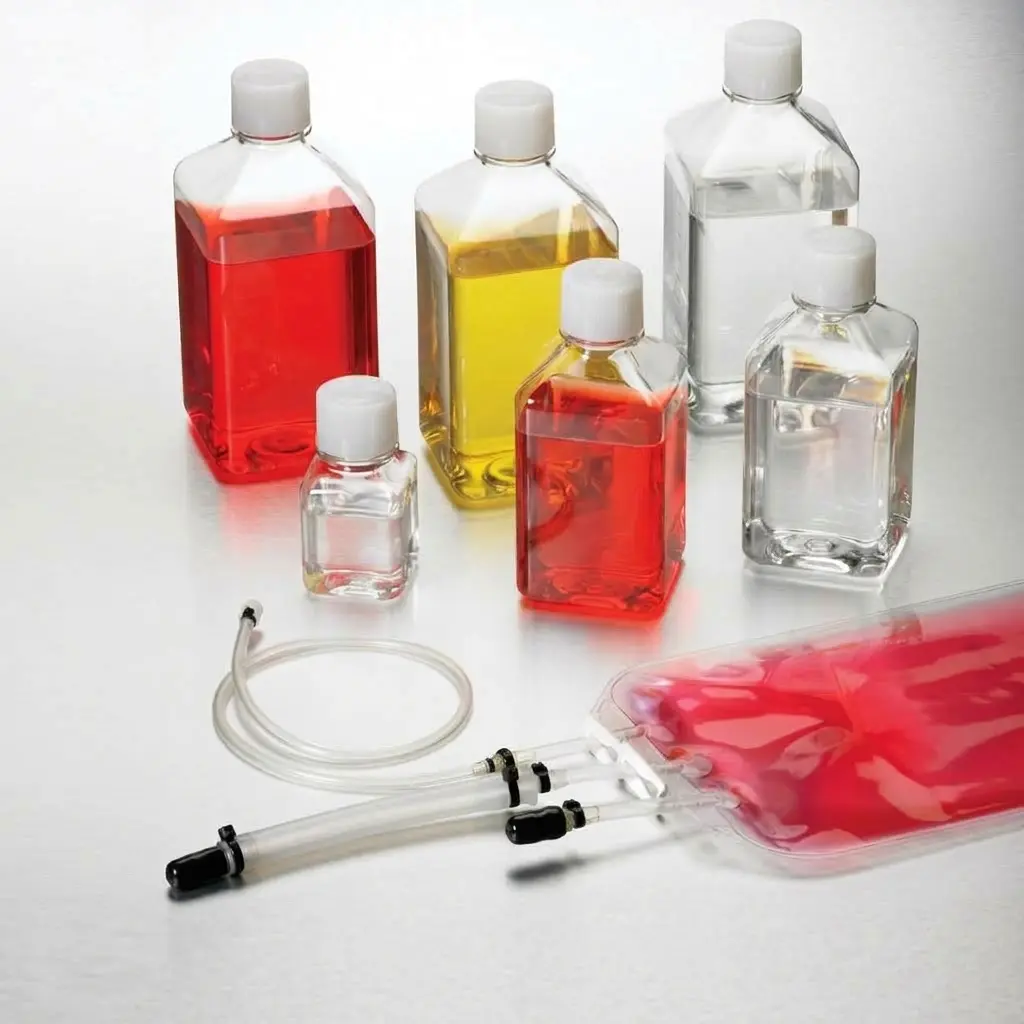
What Is Serum-Free Cell Culture Media?
Serum-free cell culture media are formulations designed to support cell growth and function without the addition of animal or human serum. They typically contain a basal medium, amino acids, vitamins, salts, buffers, carbohydrates, trace elements, and specific supplements such as hormones, growth factors, lipids, and attachment factors.
Importantly, serum-free does not automatically mean animal-component-free or chemically defined. A serum-free medium may still include animal-derived proteins such as bovine serum albumin (BSA) or transferrin. Always check the label and documentation for the exact composition.
Why Move Away from Serum?
Serum has historically been used because it provides a rich mix of nutrients, hormones, and attachment factors. However, it also introduces significant challenges.
Advantages of Serum-Free Media
Consistency: Serum varies from lot to lot, which can affect experimental reproducibility.
Safety: Serum can carry viruses, mycoplasma, prions, and endotoxins.
Regulatory compliance: Serum-free and animal-component-free (ACF) media are preferred for clinical and therapeutic production.
Defined composition: Easier to optimize and troubleshoot.
Downstream purification: Less contaminating protein simplifies purification.
Scalability: More predictable performance in bioreactors.
Ethical and practical benefits: Reduces reliance on animal-derived materials.
Types of Serum-Free Media
Serum-free media are not a single category. They range from simple serum-free formulations to highly defined, xeno-free systems.
1. Serum-Free but Animal-Derived
Contains no serum but may include animal-derived proteins such as BSA or transferrin. Useful for research but less ideal for clinical applications.
2. Animal-Component-Free (ACF)
No animal-derived components. Often uses recombinant proteins and plant or synthetic sources.
3. Xeno-Free
No non-human animal components. May contain human-derived components. Common in cell therapy.
4. Chemically Defined (CD)
All components are known and characterized. Offers the highest consistency and control.
5. Protein-Free
Contains no proteins. Often used for specialized applications where protein contamination is a concern.
6. Specialized Formulations
Designed for specific cell types or applications, such as CHO, HEK293, hybridoma, T-cell, stem cell, neural, and organoid culture.
When Should You Use Serum-Free Media?
Serum-free media are used across many applications:
Biologics production: Monoclonal antibodies, recombinant proteins, Fc-fusion proteins.
Viral vector production: AAV, lentivirus, adenovirus.
Cell therapy: CAR-T, NK cells, stem cells, regenerative medicine.
Vaccine production.
Hybridoma culture for antibody production.
3D culture and organoids.
High-throughput screening.
Bioprocess development and scale-up.
How to Choose the Right Serum-Free Medium?
Selecting the right medium requires balancing biology, process, and regulatory needs.
Key Selection Criteria
Cell type: CHO, HEK293, hybridoma, T cells, stem cells, primary cells.
Application: Expansion, transfection, production, differentiation.
Culture mode: Adherent vs suspension.
Performance goal: Maximum growth, productivity, or product quality.
Regulatory requirements: GMP, xeno-free, ACF, chemically defined.
Downstream process: Purification and analytical needs.
Scalability: Shake flasks, stirred-tank bioreactors, or continuous processes.
Cost: Medium cost, supplements, and process efficiency.
Transitioning from Serum-Containing to Serum-Free Media
Adaptation is often the most challenging step. A gradual approach is usually best.
Recommended Adaptation Strategy
- Start with your current serum concentration (e.g., 10%).
- Reduce serum stepwise: 10% → 5% → 2% → 1% → 0%.
- Mix media at each step to help cells adjust.
- Monitor viability, growth rate, morphology, and productivity.
- Increase seeding density temporarily if growth slows.
- Add supplements if needed, such as attachment factors or lipids.
- Allow 3–5 passages for stabilization.
- Cryopreserve adapted cells in serum-free freezing medium.
Some cells adapt quickly; others may require direct adaptation to a specific serum-free medium. Always validate performance before scaling up.
Best Practices for Serum-Free Culture
- Use the correct dissociation reagent for your cell type.
- Pre-coat plates for adherent cells when required.
- Maintain optimal seeding density.
- Monitor glucose, lactate, glutamine, and ammonia.
- Avoid over-confluence and nutrient depletion.
- Optimize feeding strategies for fed-batch processes.
- Test lot-to-lot consistency before large-scale use.
- Use qualified vendors with detailed documentation.
- Document all changes and passage numbers.
Common Challenges and Solutions
| Challenge | Solution |
|---|---|
| Slower initial growth | Adapt gradually; optimize supplements |
| Cell detachment | Use cell-specific dissociation reagents; coat plates |
| Foaming in bioreactors | Adjust agitation; use anti-foam if validated |
| Shear sensitivity | Optimize impeller and sparging |
| Higher cost | Optimize media volume; use concentrated feeds |
| Lot variability | Use chemically defined or ACF media from reputable suppliers |
Regulatory and Quality Considerations
For clinical and commercial applications, serum-free media must meet rigorous quality standards.
- GMP-grade media are required for clinical production.
- Documentation should include Certificates of Analysis (CoA), MSDS, and raw material origin.
- TSE/BSE risk must be assessed for animal-derived components.
- Traceability and sterility testing are essential.
- Endotoxin testing is important for cell therapy and bioproduction.
- Regulatory guidance from FDA, EMA, and ICH should be followed.
Serum-free cell culture media are a cornerstone of reproducible, scalable, and regulatory-compliant cell culture. They reduce variability, lower contamination risk, and support modern bioproduction and cell therapy workflows.
The key is to choose the right formulation for your cell type and application, then adapt your cells carefully. Whether you need a chemically defined medium for manufacturing or a xeno-free medium for cell therapy, the right serum-free system can improve both your science and your process.
Looking for high-quality serum-free cell culture media and custom formulation support?
Creative Bioarray provides cell culture media, custom formulation services, and cell culture solutions for research and bioproduction. Whether you need serum-free, chemically defined, or xeno-free media, our team can help you optimize your culture system.
Your email address will not be published. Required fields are marked *